Mitochondrial Supplements: What Actually Works (2026)
Summary
Most mitochondrial supplement guides are written by companies selling the supplements. This one isn’t. Here’s the honest breakdown of what has clinical evidence, what’s speculative, and where research peptides fit in.
The Short Version
- CoQ10 is the most established mitochondrial supplement. It’s a direct component of the electron transport chain. Statin users and people over 50 benefit the most. Evidence is solid for heart failure (Mortensen et al., 2014, n=420). Dose: 100-300mg daily
- NAD+ precursors (NMN, NR) restore a coenzyme that declines roughly 50% between ages 40-60. Clinical trials confirm they raise NAD+ levels. Whether that translates to meaningful health outcomes in healthy people is still being established
- Urolithin A has the best recent clinical trial data. A 2022 RCT (n=66, 4 months, 1000mg daily) showed improved muscle endurance in adults over 65
- PQQ triggers mitochondrial biogenesis through PGC-1alpha. Limited human data. 10-40mg daily
- Peptides (SS-31, MOTS-c) are the research frontier. SS-31 has Phase II/III trials. MOTS-c improved insulin sensitivity 30% in animal models. Neither is FDA-approved. Both represent a different category from oral supplements
View our mitochondrial peptide rankings
The Supplement Tier List
Not all mitochondrial supplements have the same quality of evidence behind them. A 2021 NIH review of dietary supplements for mitochondrial disorders found that “few clinical trials have been completed assessing the efficacy” of commonly used compounds. That’s a polite way of saying most of what’s sold has weak backing.
Here’s how they actually stack up.
Tier 1: Strong Clinical Evidence
CoQ10 (Ubiquinone/Ubiquinol)
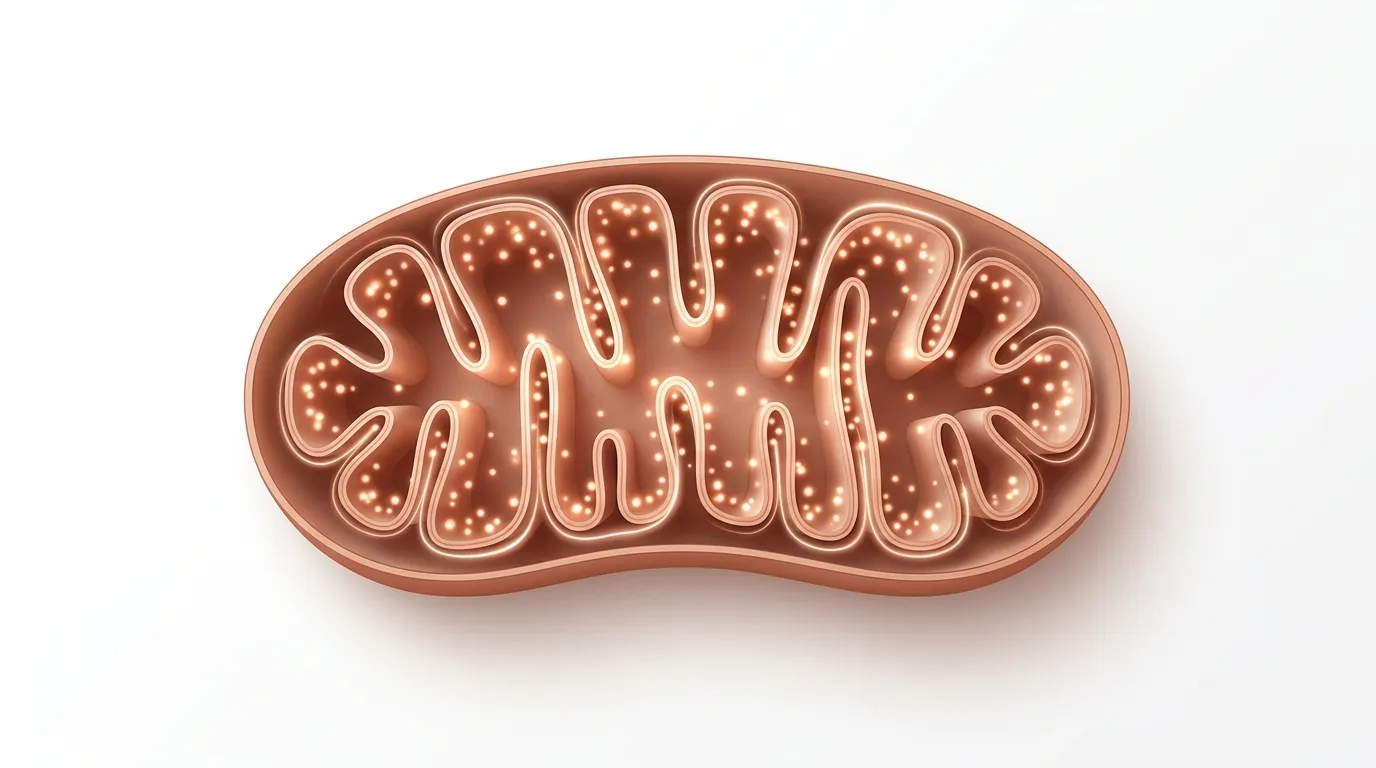
CoQ10 sits inside the electron transport chain. It’s not a supplement that “supports” mitochondria from the outside. It IS part of the machinery. Complex I passes electrons to CoQ10, which shuttles them to Complex III. Without adequate CoQ10, ATP production drops at the source.
The strongest evidence comes from heart failure. The Q-SYMBIO trial (Mortensen et al., JACC Heart Failure, 2014) randomised 420 patients to 300mg CoQ10 or placebo for 2 years. The CoQ10 group had a 43% reduction in cardiovascular mortality. That’s not a marginal effect.
Statin users are a clear population who benefit. Statins block HMG-CoA reductase, which is also involved in CoQ10 synthesis. Blood levels of CoQ10 drop 40% on statins. Supplementation at 100-200mg daily restores levels.
Dose: 100-300mg daily. Ubiquinol (reduced form) is better absorbed than ubiquinone, but both work. Take with fat.
NAD+ Precursors (NMN, NR)
NAD+ itself can’t be taken orally. It gets broken down in the gut. Instead, precursors like NMN (nicotinamide mononucleotide) and NR (nicotinamide riboside) are converted to NAD+ after absorption.
A 2024 meta-analysis in Nature Metabolism confirmed that NR supplementation reliably raises blood NAD+ levels in humans. A separate trial found improvements in long-COVID cognitive symptoms with NR. The University of Washington published a 2022 study showing NMN at 250mg daily improved muscle insulin sensitivity in prediabetic women.
The question isn’t whether NMN/NR raise NAD+ levels. They do. The question is whether raising NAD+ in otherwise healthy people produces meaningful functional improvements. The jury is still out on that for non-clinical populations.
For direct NAD+ (IV or injection), see our NAD+ peptide profile.
Dose: NMN 250-500mg daily; NR 300-1000mg daily. Morning dosing preferred.
Urolithin A
This one surprised the research community. Urolithin A is a gut metabolite of ellagitannins (found in pomegranates and berries). Most people don’t produce enough of it naturally because it requires specific gut bacteria.
A 2022 randomised controlled trial (Singh et al., JAMA Network Open, n=66, adults over 65, 1000mg daily for 4 months) showed improved muscle endurance compared to placebo. A 2019 study (Andreux et al., Nature Metabolism, n=60) showed improved mitochondrial biomarkers at 500-1000mg daily.
The mechanism is mitophagy. Urolithin A activates the recycling of damaged mitochondria, clearing out dysfunctional ones so healthy ones can replace them. It doesn’t boost existing mitochondria. It replaces the broken ones.
Dose: 500-1000mg daily.
Tier 2: Moderate Evidence
Creatine
Most people associate creatine with muscle. But creatine is a phosphate donor for ATP regeneration. It works in every cell, not just muscle. A randomised crossover study in 7 patients with mitochondrial myopathy found creatine supplementation increased grip strength and dorsiflexion torque by 11%.
For brain health, creatine is increasingly studied. It’s cheap, safe at 3-5g daily, and has decades of safety data. Not mitochondria-specific, but it supports the energy system that mitochondria feed into.
Dose: 3-5g daily. No loading phase needed.
Alpha-Lipoic Acid
Works as both a fat- and water-soluble antioxidant inside mitochondria. The best evidence is for diabetic neuropathy (600mg IV, multiple RCTs). For general mitochondrial support, the data is thinner. Commonly stacked with acetyl-L-carnitine.
Dose: 300-600mg daily (R-lipoic acid preferred).
L-Carnitine / Acetyl-L-Carnitine (ALCAR)
Carnitine transports fatty acids into mitochondria for oxidation. Deficiency impairs fat metabolism at the mitochondrial level. ALCAR adds an acetyl group that crosses the blood-brain barrier.
Evidence exists for fatigue in elderly populations and as an adjunct in mitochondrial disease. A PMC review (Nicolson, 2014) noted benefits for chronic fatigue. But healthy people with normal carnitine levels may not see much effect.
Dose: L-carnitine 500-2000mg daily; ALCAR 500-1500mg daily.
Tier 3: Emerging / Limited Evidence
PQQ (Pyrroloquinoline Quinone)
PQQ activates PGC-1alpha, the master regulator of mitochondrial biogenesis. In theory, more PGC-1alpha means more mitochondria. Animal data supports this. Human data is limited to small studies showing improvements in sleep quality and C-reactive protein at 20mg daily.
A 2024 review suggested 40mg daily for 8-12 weeks for measurable effects. But there are no large RCTs.
Dose: 10-40mg daily.
The Peptide Tier: Research Frontier
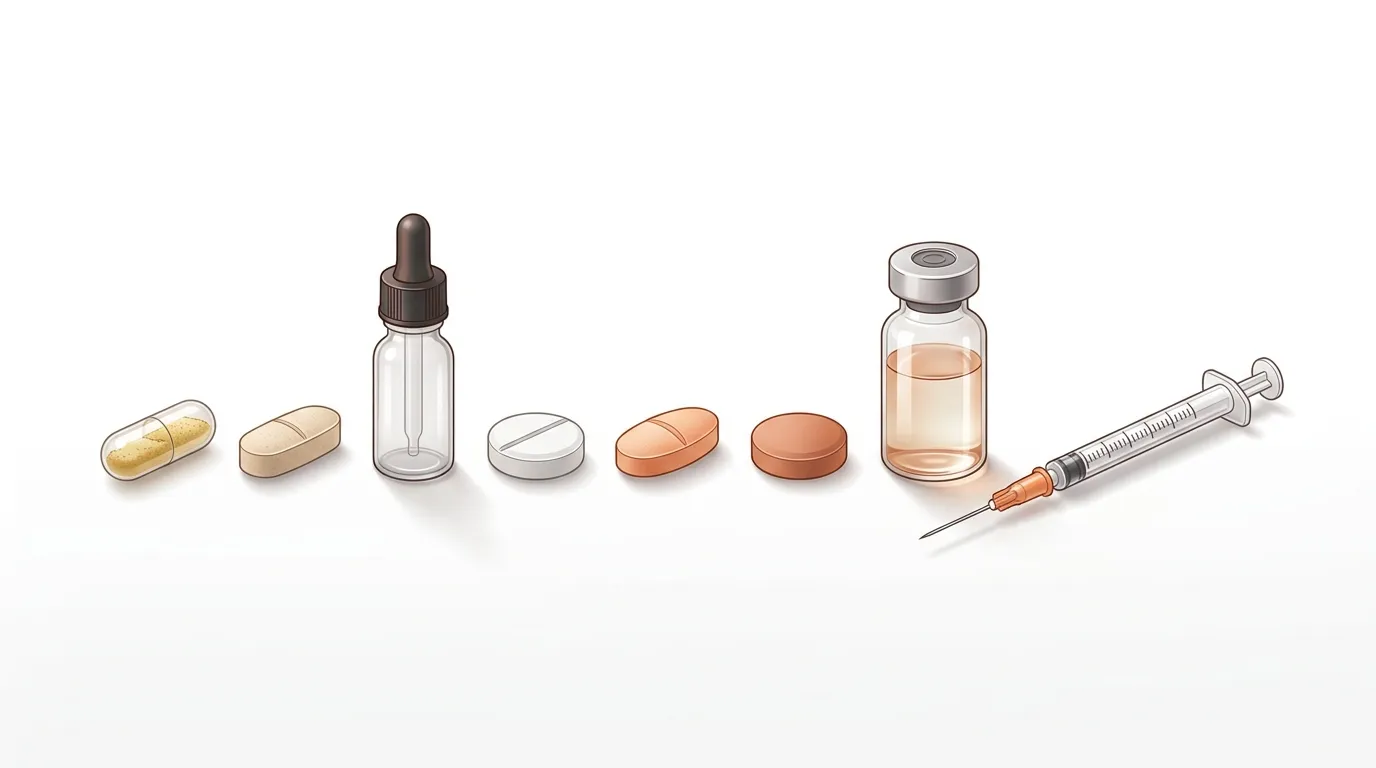
Standard supplements work through the gut. They’re absorbed, metabolised, and whatever reaches your mitochondria has been diluted along the way. Peptides bypass that. They’re injected directly into the bloodstream and reach mitochondria at therapeutic concentrations.
Two peptides are specifically designed for mitochondrial function. Neither is FDA-approved. Both have stronger mechanistic data than most oral supplements.
SS-31 (Elamipretide)
SS-31 binds directly to cardiolipin in the inner mitochondrial membrane. Cardiolipin is essential for electron transport chain function. When it oxidises with age, ATP production drops. SS-31 prevents that oxidation.
Phase II trial data (2018, 36 patients with primary mitochondrial myopathy, 40mg daily for 12 weeks) showed improved 6-minute walk test and fatigue scores. A Phase III trial for Barth Syndrome (48 weeks) showed trends toward cardiac improvement.
This is the closest any mitochondrial peptide has come to FDA approval.
Dose: 5-10mg daily SubQ for general support; 40mg daily in clinical trials. Calculate your dose
MOTS-c
MOTS-c is encoded by your own mitochondrial DNA. Your body produces it naturally. Levels decline with age. It activates AMPK (the same pathway that Metformin and exercise activate) and improved insulin sensitivity by roughly 30% in animal studies (Lee et al., Cell Metabolism, 2015). A single dose improved running time by 12% and distance by 15% (Hyatt et al., 2022).
MOTS-c is WADA prohibited. It’s not available through pharmacies. It exists in the research peptide space.
Dose: 5-10mg daily SubQ. View MOTS-c profile
For a detailed comparison of these peptides, read our complete mitochondrial peptide guide.
How to Stack Them
A practical approach based on evidence tiers:
Foundation (everyone):
- CoQ10 100-300mg daily (especially if on statins or over 50)
- Creatine 3-5g daily
Second layer (longevity-focused):
- NMN 250-500mg or NR 300mg daily
- Urolithin A 500-1000mg daily
Research tier (advanced, with medical oversight):
- NAD+ IV 250-500mg weekly or SubQ 100-500mg 2-3x weekly
- SS-31 5-10mg daily SubQ
- MOTS-c 5-10mg daily SubQ (WADA prohibited)
Check interactions between any peptides in your stack: Interaction checker
Use our cost calculator to work out per-dose pricing.
Frequently Asked Questions
What is the best supplement for mitochondrial health?
CoQ10 at 100-300mg daily has the strongest clinical evidence for mitochondrial support, including a major RCT showing 43% reduced cardiovascular mortality in heart failure patients. For people focused on longevity, NAD+ precursors (NMN or NR) address the age-related decline in a coenzyme that mitochondria depend on.
Do mitochondrial supplements actually work?
Some do, some don’t. CoQ10, NAD+ precursors, and Urolithin A have randomised controlled trial data in humans. PQQ and many “mitochondrial blend” supplements have mostly animal data or very small human studies. The dose on the label matters. Most combo supplements underdose every ingredient.
What is the difference between supplements and peptides for mitochondria?
Oral supplements are absorbed through the gut, metabolised by the liver, and reach mitochondria in reduced concentrations. Peptides like SS-31 are injected and reach mitochondria directly at therapeutic levels. SS-31 physically binds to cardiolipin in the inner membrane. No oral supplement does this. Peptides are not FDA-approved and require medical oversight.
How much CoQ10 should I take for mitochondria?
The Q-SYMBIO heart failure trial used 300mg daily of CoQ10 for 2 years and showed significant mortality reduction. For general mitochondrial support, 100-200mg daily is standard. Take with a meal containing fat for better absorption. Ubiquinol is better absorbed than ubiquinone in older adults.
Can you take NAD+ orally?
NAD+ itself breaks down in the gut. Oral precursors NMN (250-500mg) and NR (300-1000mg) are converted to NAD+ after absorption. They reliably raise blood NAD+ levels (confirmed by 2024 meta-analysis in Nature Metabolism). For direct NAD+, IV infusion (250-1000mg) or SubQ injection (100-500mg) bypasses conversion entirely. See our NAD+ profile for dosing protocols.