Best Peptides for Mitochondrial Health: SS-31, MOTS-c, NAD+
Summary
Mitochondrial peptides are compounds that either target mitochondrial function directly or are encoded by mitochondrial DNA itself. Three have emerged as the most researched options for cellular energy, metabolic health, and longevity: SS-31 (elamipretide), MOTS-c, and NAD+.
The Three Peptides
- SS-31 is a synthetic tetrapeptide that binds cardiolipin in the inner mitochondrial membrane, preventing lipid peroxidation and optimizing the electron transport chain. It has Phase II/III clinical trial data for heart failure and mitochondrial disease
- MOTS-c is a 16-amino-acid peptide encoded by mitochondrial DNA. It activates AMPK through the folate-AICAR pathway, improving insulin sensitivity by approximately 30% in animal models (Lee et al., Cell Metabolism, 2015)
- NAD+ is a coenzyme (not technically a peptide) present in every cell. Levels decline roughly 50% between ages 40 and 60. Direct supplementation restores mitochondrial function, activates sirtuins, and supports DNA repair through PARP activation
Why 2026
- The FDA reclassification of 14 peptides to Category 1 (February 2026) includes several compounds in this space
- SS-31 Phase III data from the Barth Syndrome trial (40mg daily, 48 weeks) showed trends toward cardiac improvement
- MOTS-c research has expanded from metabolic studies into neuroprotection and pancreatic islet cell senescence (Nature, 2025)
- A fourth peptide, Humanin, discovered in the brain of an Alzheimer’s patient, is gaining attention for neuroprotection
Browse all mitochondrial peptides | Compare SS-31 vs MOTS-c
Your Mitochondria Are Declining. That’s the Problem.
Most conversations about aging focus on hormones, telomeres, or inflammation. They’re downstream effects. The upstream driver is mitochondrial dysfunction.
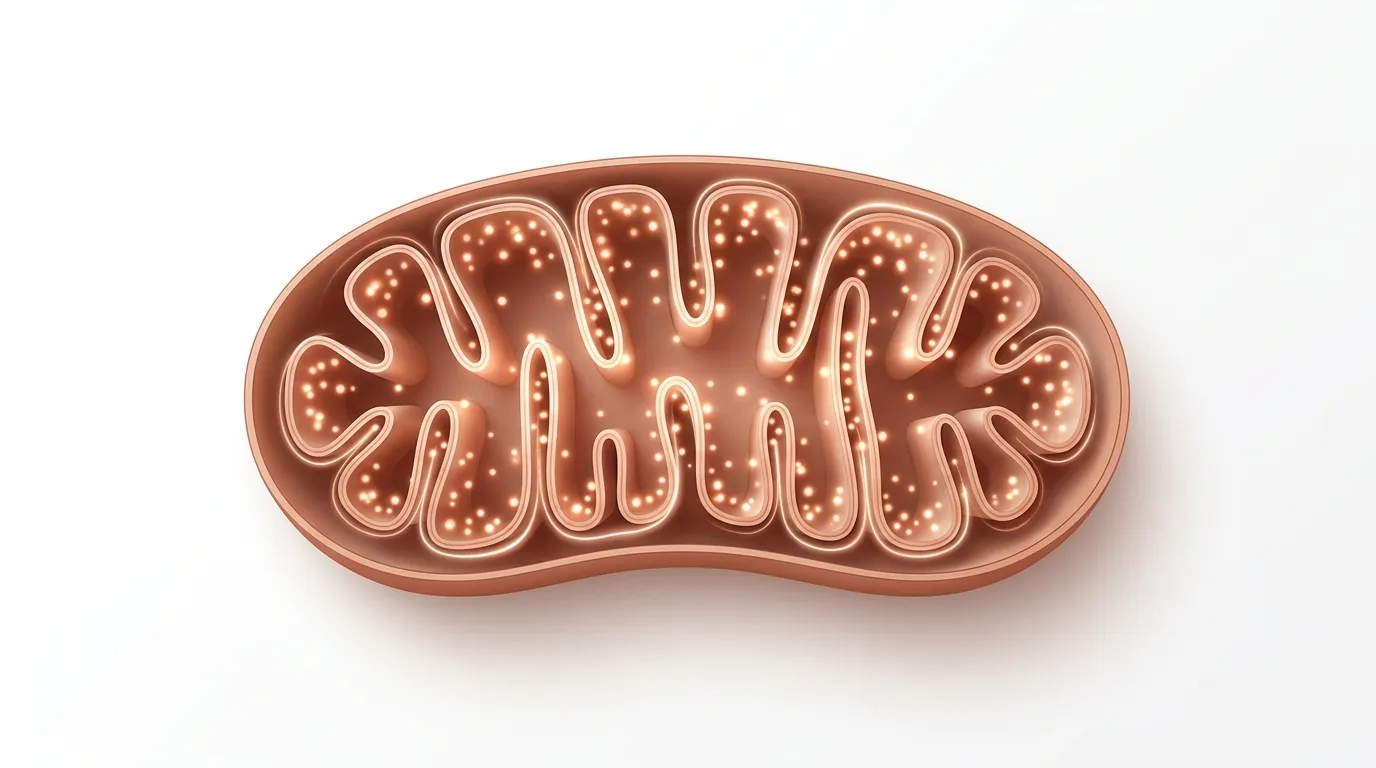
A single cell contains hundreds to thousands of mitochondria. They produce roughly 90% of your body’s ATP. When they stop working efficiently, energy production drops, reactive oxygen species accumulate, and cellular repair mechanisms falter. The result looks like aging: fatigue, cognitive decline, reduced exercise capacity, metabolic dysfunction.
Mitochondrial function declines measurably with age. NAD+ levels drop by roughly 50% between age 40 and 60. Cardiolipin oxidation increases. The electron transport chain becomes less efficient. This isn’t speculation. It’s measurable in blood work.
The three peptides in this guide target different parts of this decline. SS-31 stabilises the inner membrane. MOTS-c activates metabolic stress responses. NAD+ replenishes the coenzyme that every mitochondrial process depends on. Different entry points, same goal: keep the powerhouses running.
SS-31: The Membrane Stabiliser
SS-31 (also called elamipretide or Bendavia) is a synthetic aromatic-cationic tetrapeptide. It doesn’t come from mitochondrial DNA. It was designed in a lab specifically to reach the inner mitochondrial membrane.
The mechanism is unusually precise. SS-31 binds to cardiolipin, a phospholipid found exclusively in the inner mitochondrial membrane. Cardiolipin is essential for the proper functioning of cytochrome c oxidase and other electron transport chain complexes. When cardiolipin oxidises (which happens increasingly with age), the electron transport chain loses efficiency, ATP production drops, and reactive oxygen species leak out.
SS-31 prevents that oxidation. It stabilises cardiolipin, restores electron transport chain efficiency, and reduces mitochondrial ROS. A 2020 study in aged mice showed 8 weeks of SS-31 reversed age-related muscle decline, increased ATP production, and reduced oxidative stress markers.
Clinical Trials
SS-31 has the strongest clinical pipeline of any mitochondrial peptide. The key studies:
- Primary Mitochondrial Myopathy Phase II (2018): 36 patients, 40mg daily for 12 weeks. Improved 6-minute walk test and fatigue scores
- Heart Failure (2019): 0.25mg/kg/hr IV infusion reduced cardiac injury markers in heart failure patients
- Barth Syndrome Phase III (2021): 40mg daily for 48 weeks. Trends toward cardiac improvement, though primary endpoint was not met
Dosing
| Protocol | Dose | Frequency | Route |
|---|---|---|---|
| General support | 5-10mg | Once daily | SubQ |
| Athletic performance | 10-20mg | Pre-workout | SubQ |
| Clinical (trial doses) | 40mg | Once daily | SubQ or IV |
SS-31 is light-sensitive. Store in amber vials, refrigerated. Use within 30 days of reconstitution. Calculate your dose
MOTS-c: The Metabolic Sensor
MOTS-c is fundamentally different from SS-31. It’s not synthetic. It’s encoded by your own mitochondrial DNA, specifically the 12S rRNA gene (MT-RNR1). Your body makes it. Levels decline with age.
The mechanism is indirect but powerful. MOTS-c inhibits the folate cycle, which leads to accumulation of AICAR, which activates AMPK. AMPK is sometimes called the “master metabolic switch.” It triggers glucose uptake, fatty acid oxidation, and mitochondrial biogenesis. A 2018 study (Kim et al., Cell Metabolism) showed MOTS-c translocates to the cell nucleus within 30 minutes of metabolic stress, where it binds stress-response transcription factors NRF2 and ATF1.
The 2015 landmark paper by Lee et al. in Cell Metabolism showed MOTS-c prevented obesity and improved insulin sensitivity by approximately 30% in high-fat diet mice. A 2021 Nature Communications study showed it enhanced physical performance across age groups, with exercise inducing an 11.9-fold increase in skeletal muscle MOTS-c. A 2022 study (Hyatt et al.) found a single dose improved running time by 12% and distance by 15%.
The latest research from 2025 (Nature) demonstrates MOTS-c prevents pancreatic islet cell senescence and delays diabetes onset. This is new territory for a peptide that was initially studied purely for metabolic effects.
Dosing
| Protocol | Dose | Frequency | Notes |
|---|---|---|---|
| Conservative start | 5mg | Once daily | Morning, before exercise |
| Metabolic health | 5-10mg | Once daily | SubQ |
| Anti-aging | 15mg | 3x weekly | SubQ |
| Exercise performance | 10-15mg | Pre-workout | AMPK activation within 30 minutes |
Short half-life (approximately 30 minutes). Morning dosing before exercise is optimal for AMPK activation timing. Reconstituted MOTS-c degrades faster than most peptides. Use within 14 days.
View MOTS-c profile | Calculate your dose | Model accumulation
NAD+: The Universal Fuel
NAD+ isn’t a peptide. It’s a coenzyme. But it’s included in every serious mitochondrial health discussion because it’s the substrate that mitochondria run on. Without NAD+, the electron transport chain and citric acid cycle can’t function. Without those, no ATP.
NAD+ participates in over 500 enzymatic reactions. It’s required for sirtuin activation (the SIRT1-SIRT7 family linked to longevity), PARP-mediated DNA repair, and CD38-driven immune signalling. When NAD+ levels drop, all of these processes compete for a shrinking pool.
The decline is dramatic and measurable. Human studies show roughly 50% reduction in NAD+ levels between ages 40 and 60. This isn’t gradual. It accelerates.
Direct NAD+ supplementation (IV, IM, or SubQ) bypasses the conversion steps needed for oral precursors like NMN and NR. A 2024 meta-analysis in Nature Metabolism confirmed the safety and efficacy of NAD+ precursors, while a 2023 study in Neuropharmacology Research demonstrated intranasal NAD+ delivery for direct brain access via olfactory and trigeminal pathways.
Delivery Routes
| Route | Dose | Frequency | Bioavailability |
|---|---|---|---|
| IV infusion | 250-1000mg | 1-2x weekly | 100% |
| IM/SubQ injection | 100-500mg | 2-3x weekly | High |
| Intranasal | 25-50mg | 1-2x daily | Direct CNS access |
| Oral (NMN/NR) | 100-500mg | Daily | Lower (first-pass) |
View NAD+ profile | Calculate your dose
How They Work Together
These three peptides target mitochondrial function through completely independent pathways. That’s what makes the combination interesting from a research perspective.
| SS-31 | MOTS-c | NAD+ | |
|---|---|---|---|
| Target | Inner membrane cardiolipin | AMPK via folate-AICAR | Electron transport chain substrate |
| Mechanism | Prevents lipid peroxidation | Activates metabolic stress response | Restores coenzyme levels |
| Origin | Synthetic | Mitochondrial DNA-encoded | Naturally occurring coenzyme |
| Half-life | ~2 hours | ~30 minutes | 1-4 hours (intracellular) |
| Clinical trials | Phase II/III | Preclinical + human PK | Extensive (precursors) |
| WADA status | Not prohibited | Prohibited (S0) | Not prohibited |
The interaction data from each peptide’s profile confirms the synergies. SS-31 lists MOTS-c and NAD+ as synergistic. MOTS-c lists NAD+ precursors as synergistic. Humanin lists all three as synergistic.
Check whether your stack has any conflicts: Interaction checker
The Fourth Peptide: Humanin
Humanin deserves a mention. It was the first mitochondria-derived peptide discovered, cloned in 2001 from the occipital lobe of an Alzheimer’s patient (Hashimoto et al., PNAS). It’s a 24-amino-acid peptide encoded from the 16S rRNA region of mitochondrial DNA.
Humanin’s niche is cytoprotection. It blocks pro-apoptotic proteins like Bax, reduces beta-amyloid toxicity, and protects cells against oxidative stress. A 2020 study found centenarian offspring have significantly higher humanin levels than age-matched controls. Naked mole-rats, which live 30+ years (10x expected for their size), maintain stable humanin levels throughout life.
The analog HNG (Humanin G with a serine-to-glycine substitution at position 14) is roughly 1,000 times more potent than native humanin. Dosing for HNG is 0.5-2mg, 2x weekly, compared to 1-5mg for native humanin.
Safety Across the Category
All four mitochondrial peptides share an excellent safety profile relative to other peptide categories. No serious adverse events have been reported in clinical trials for SS-31 at doses up to 40mg daily for 48 weeks. MOTS-c and NAD+ are generally well-tolerated at standard doses.
The main concerns are specific to each:
- SS-31: Light-sensitive; degrades if exposed to light. Requires amber vials and dark storage
- MOTS-c: Monitor blood glucose if stacking with Metformin, Berberine, or other AMPK activators. Risk of additive hypoglycemia
- NAD+: IV infusion can cause flushing and temporary nausea. Avoid alcohol (significantly reduces NAD+ levels)
- Humanin: Active cancer contraindication due to anti-apoptotic effects
None of these peptides are FDA-approved for any indication. SS-31 is the closest, with Phase III data.
View the full best-for mitochondrial health ranking
Frequently Asked Questions
What is the best mitochondrial peptide?
SS-31 (elamipretide) has the strongest clinical data, with Phase II and III trials in mitochondrial disease and heart failure. MOTS-c has the strongest metabolic data, including a 30% improvement in insulin sensitivity in animal models. NAD+ has the broadest evidence base through its precursors NMN and NR. The optimal choice depends on the specific goal.
Can you stack mitochondrial peptides together?
SS-31, MOTS-c, NAD+, and Humanin all target different mechanisms and are listed as synergistic in their interaction profiles. SS-31 stabilises the membrane, MOTS-c activates AMPK, NAD+ replenishes the coenzyme pool. No antagonistic interactions have been documented between these four. Use the interaction checker to verify your specific combination.
How long do mitochondrial peptides take to work?
SS-31 produces subtle energy improvements within 1-2 weeks, with significant exercise capacity changes at 4-8 weeks. MOTS-c activates AMPK within 30 minutes of administration, with metabolic benefits measurable at 2-4 weeks. NAD+ IV produces acute improvements in energy and mental clarity within hours, with sustained benefits building over 4-8 weeks.
Is MOTS-c legal?
MOTS-c is WADA prohibited under S0 (unapproved substances). It cannot be used by athletes subject to anti-doping testing. In the US, MOTS-c was on the FDA Category 2 list but is expected to move to Category 1 following the February 2026 reclassification announcement. SS-31 and NAD+ are not currently WADA prohibited.
What is the difference between SS-31 and MOTS-c?
SS-31 is a synthetic peptide that physically binds to cardiolipin in the inner mitochondrial membrane, preventing oxidative damage. MOTS-c is encoded by mitochondrial DNA and works through AMPK signalling to improve metabolic adaptation. SS-31 is structural protection; MOTS-c is metabolic programming. They target different problems and are synergistic when combined.